RRRA Lecture & Seminar Series
2022 LECTURES

2022 Lectures & Seminars
Booking (which is essential) for some talks will be organised through Eventbrite, otherwise through a simple form – this will be indicated next to each talk. All public talks and seminars will be uploaded to our new YouTube channel.
2022 Lectures

Thursday 27 January 2022
Martin Dearne
Mansio / Mutatio Spacing Issues in the London Region
The Roman road network was largely an official creation and one of its functions was to service the cursus publicus. Thus, small roadline settlements are often hypothesized to be the sites of the mansiones and mutatios that this system used. But, if so, nothing like a regular system of such official ‘hotels’ and horse changing stations can be detected on all roads. Focusing on the road network in the broad area around Londinium, this talk will try to explore what that might be telling us about how the cursus publicus used the Roman road network.
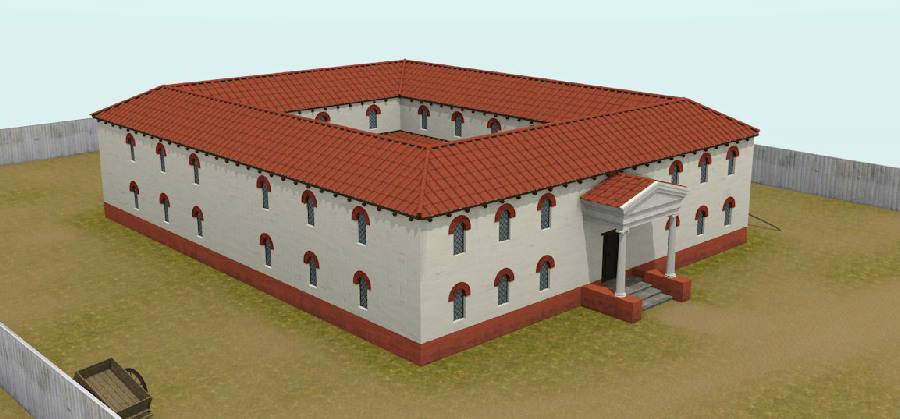
Reconstruction of a Mansio

Thursday 24 February 2022
John Poulter
The road over High Street in the English Lake District – is it Roman?

Thursday 24 March 2022
David Picker-Kille
Between a Rut and a Hard Place: A case study in Roman road construction and use from Gallo-Roman Burgundy
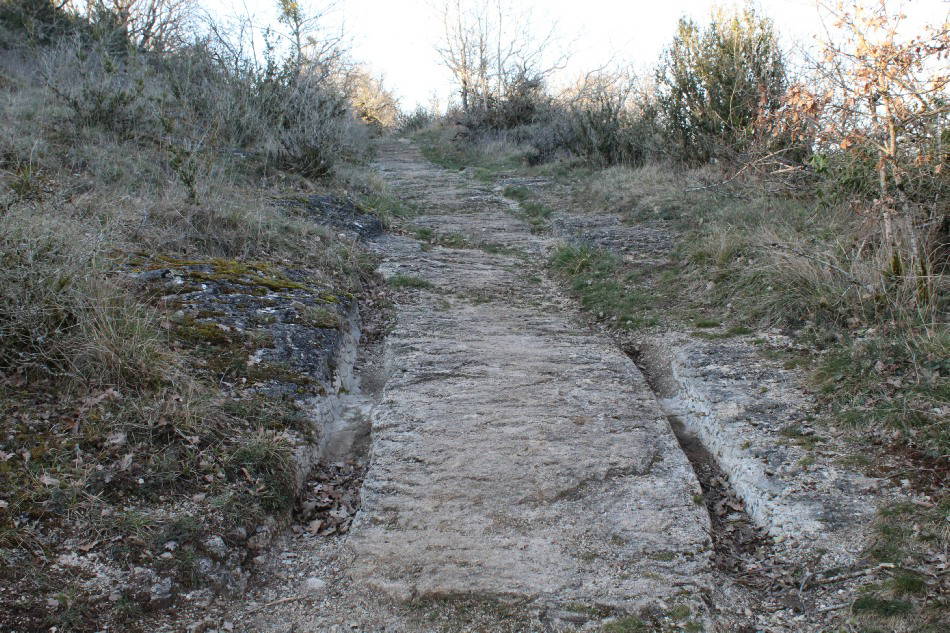
View of deep ruts in the bedrock on a road at Nolay, facing north.

Thursday 14 April 2022
Christopher Green
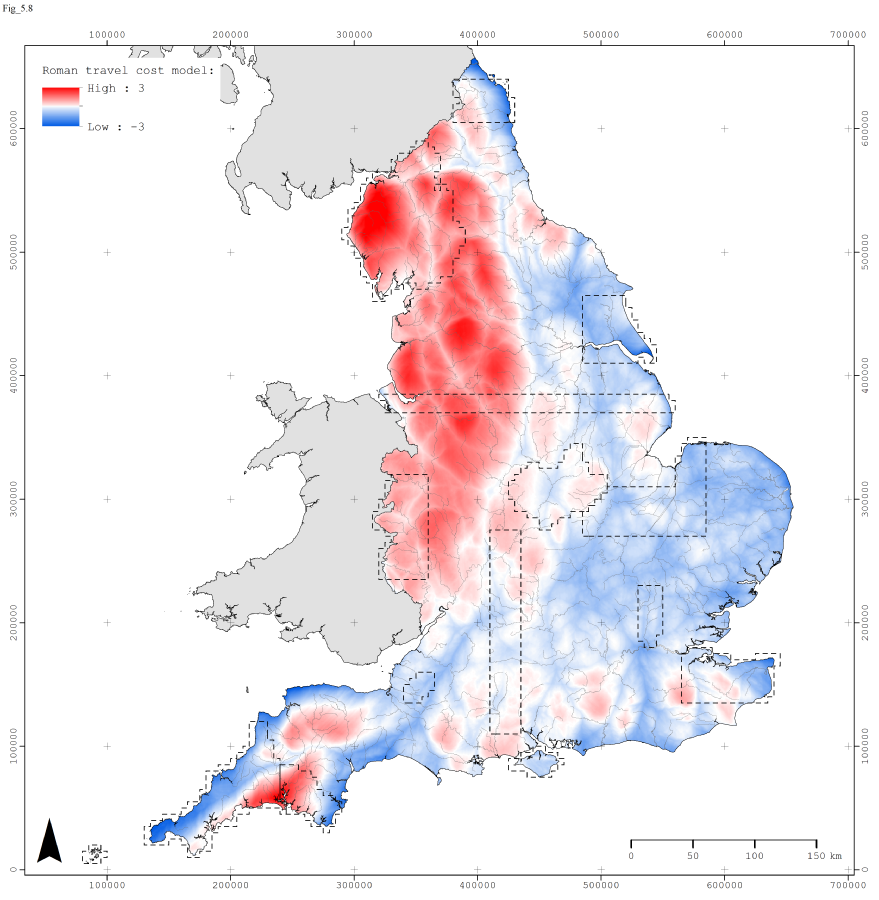
Modelling movement in Roman Britain
he English Landscapes and Identities project (EngLaId) was funded by the European Research Council and ran in the School of Archaeology at the University of Oxford between 2011 and 2016, under the aegis of Chris Gosden. Chris Green and Tyler Franconi were postdoctoral researchers on the project, respectively representing expertise in spatial analysis and in the Roman period. EngLaId examined England in the period between 1500 BC and the Domesday survey of AD 1086, but within this period the Roman period was unique in its level of internal (and international) connectivity due to the creation of the extensive network of Roman roads.
This talk will present methods applied by the EngLaId team for modelling movement, and their interpretations. These included information on the nature of the terrain, contrasting also movement by land and by water. We also used the densities and distribution of archaeological evidence as a proxy for land use and movement. In addition, we included place name evidence for the early medieval period and the little we have from the Romano-
Aerial photo looking east towards along the Military Way towards Housesteads Roman fort
Aerial photo looking east towards along the Military Way towards Housesteads Roman fort

Thursday 26 May 2022
Mike Haken
The Stainmore road, its unique Roman camps, and Venutius’s war
For centuries, a series of enigmatic camps that line the road between Scotch Corner and Carlisle have fascinated antiquarians and archaeologists. Four of these camps are now known, each having substantial defences and an extraordinary number of entrances (Rey Cross has eleven), and they have long been suspected to have played some part in Rome’s actions against Venutius and the Brigantes in the early Flavian period. But what exactly was their role, why were they built in such a non-

Thursday 23 June 2022
Martin Papworth
Finding the Roman fort at Killerton.
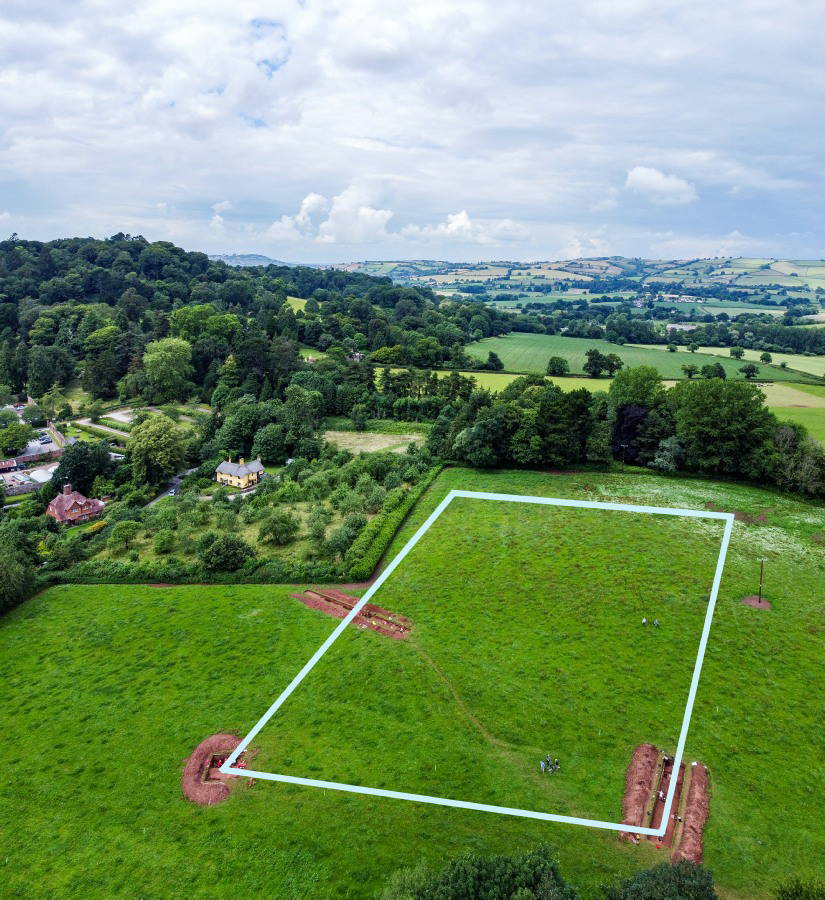
Since 1984, a photograph had intrigued archaeologists. It seemed to show a triple ditched, rectangular enclosure with rounded corners. This would be a typical shape for a Roman fort but during subsequent fieldwalking of ploughsoil nothing Roman was found.
In 2019, National Trust volunteers carried out a geophysical survey which confirmed the lines of the enclosure’s ditches. Covid delayed a planned excavation but eventually, in June 2021, three trenches were excavated by National Trust archaeologists. This talk will describe what was found during the excavation and will begin to examine the potential routeways that may once have linked this site to others within the Devon landscape.