
Introduction to The Roman Roads of Britain
The Roman Roads Research Association was formed to advance knowledge of the Roman road network and promote the study of Roman roads and Roman heritage throughout the British Isles. .
Introducing R.R.R.A.
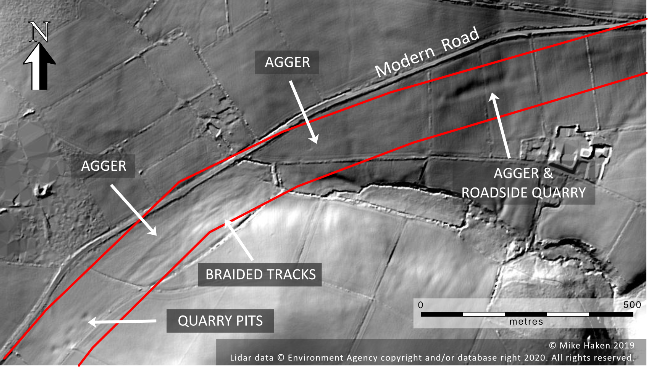
We continue Margary’s work by researching Roman roads using modern technology such as LiDAR, which uses lasers fired from an aircraft to create an incredibly accurate model of the earth’s surface beneath any vegetation, revealing surviving archaeology otherwise not visible. The example below is a Roman road in Cornwall, where until recently there was no firm evidence of any Roman roads at all. This was spotted in 2018 but at least one other road has recently been identified in Cornwall during lockdown thanks to volunteers with the Understanding Landscapes project led by Dr. Chris Smart (University of Exeter).