What are Geophysics and Lidar?
Unveiling Ancient Pathways: Geophysics and LiDAR in Archaeological Exploration of Roman Roads
Understanding
Geophysics in Archaeology
Geophysics comprises a suite of non-invasive techniques used to detect and analyze subsurface features. In archaeology, these methods are instrumental in revealing hidden structures without the need for excavation, preserving the site’s integrity.
Applications for Roman Roads:
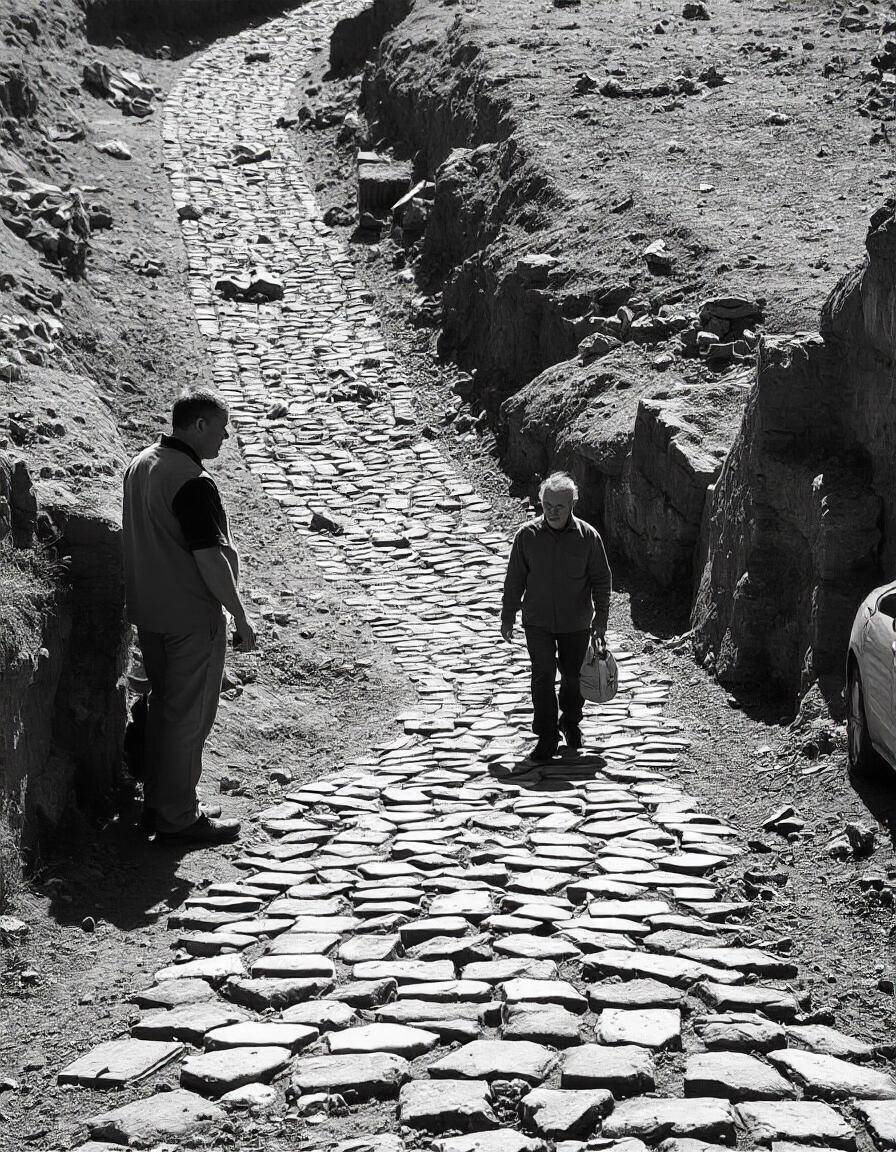
- Ground Penetrating Radar (GPR): This technique uses radar pulses to image the subsurface, helping archaeologists identify buried segments of Roman roads. GPR can distinguish different layers of road construction, such as cobblestones and sub-grade materials, providing insights into ancient engineering techniques.
- Electrical Resistivity: By measuring how strongly the ground resists electrical currents, this method can highlight anomalies that suggest the presence of Roman road materials like compacted gravel or stone paving.
- Magnetometry: This technique detects magnetic anomalies in the soil caused by past disturbances, such as road construction. Magnetometry can pinpoint pathways and junctions, helping to trace the extent of Roman road networks.
Illuminating The Past
with LiDAR
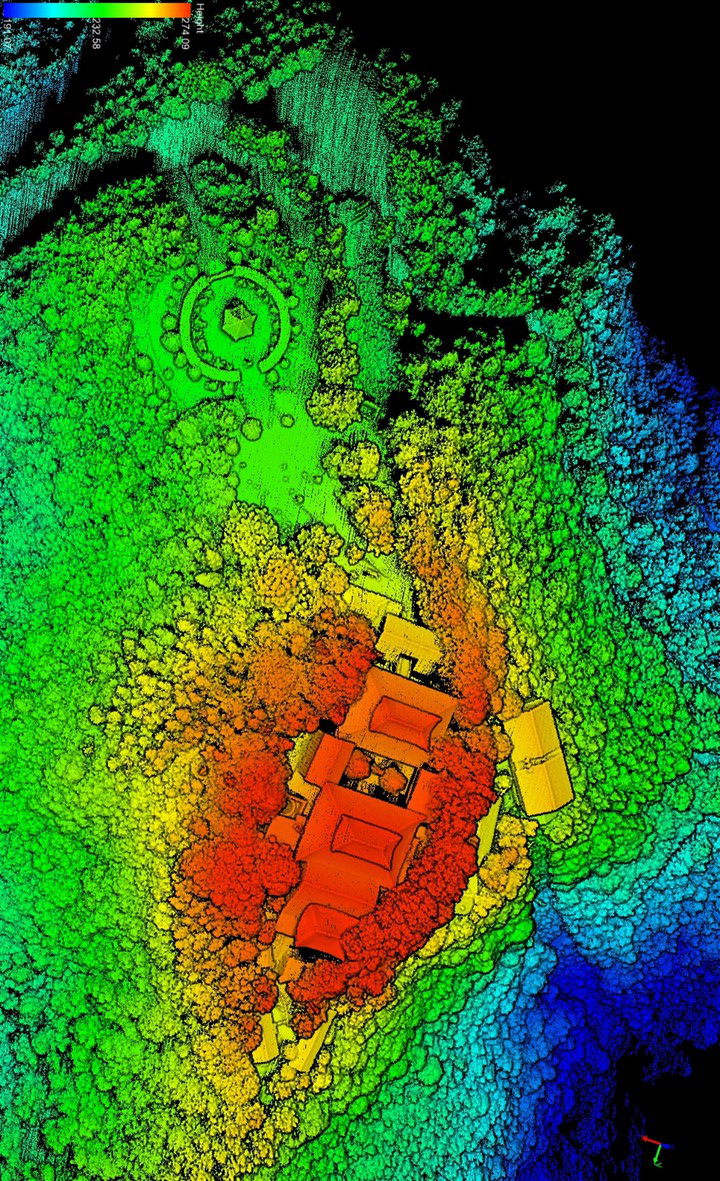
LiDAR employs laser scanning technology to create detailed 3D maps of the Earth’s surface, offering an aerial perspective of archaeological sites.
Enhancing Exploration of Roman Roads:
- Surface Mapping: LiDAR generates high-resolution topographic maps that reveal subtle land formations indicative of ancient roads, even in densely vegetated or forested areas where traditional surveys fall short.
- Digital Elevation Models (DEMs): These models help reconstruct landscapes as they were in Roman times, enabling the study of roads in relation to settlements, military outposts, and other infrastructure.
- Vegetation Penetration: By filtering out vegetation, LiDAR can uncover road traces and alignments hidden beneath forest canopies, leading to discoveries of previously unknown routes.
Integrated Approaches for Rediscovery:
Together, Geophysics and LiDAR revolutionize the study of Roman roads by offering comprehensive data that guide excavation efforts and historical interpretations. These technologies allow archaeologists to visualize ancient networks in their entirety, forming a basis for understanding Roman expansion, trade, and cultural interactions.