
RRRA Lecture & Seminar Series
2024 – 2025 LECTURES

2024 – 2025 Lectures & Seminars
We are pleased to announce another outstanding list of speakers for our fifth season. As usual, all talks are online, open to the public and free of charge, although donations towards running costs are always welcomed.
Please note that this season bookings should be made through Ticket Tailor as well as Eventbrite, with links posted on this page as they become available. As usual, talks will be recorded and made viewable after the event on YouTube.
2024 – 2025 Lectures

Thursday 26 September 2024
Prof. David Breeze
The logistics of Agricola’s final campaign
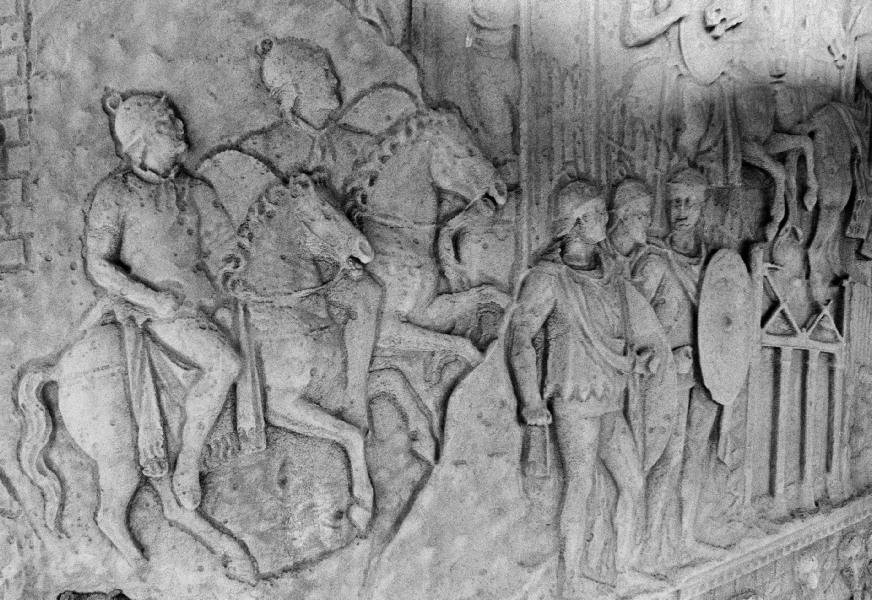
In his final season, the Roman governor Agricola ‘marched light’. In his lecture David Breeze explores what this means, where Agricola marched and how he got to the site of his famous battle at Mons Graupius, supplying his army en route.
David Breeze was Chief Inspector of Ancient Monuments for Scotland and led the team which made the Antonine Wall a World Heritage Site. He has written extensively about Roman frontiers and the Roman army.

Thursday 24 October 2024
Dr. John Reid
The Archaeology of Conflict in Roman Britain
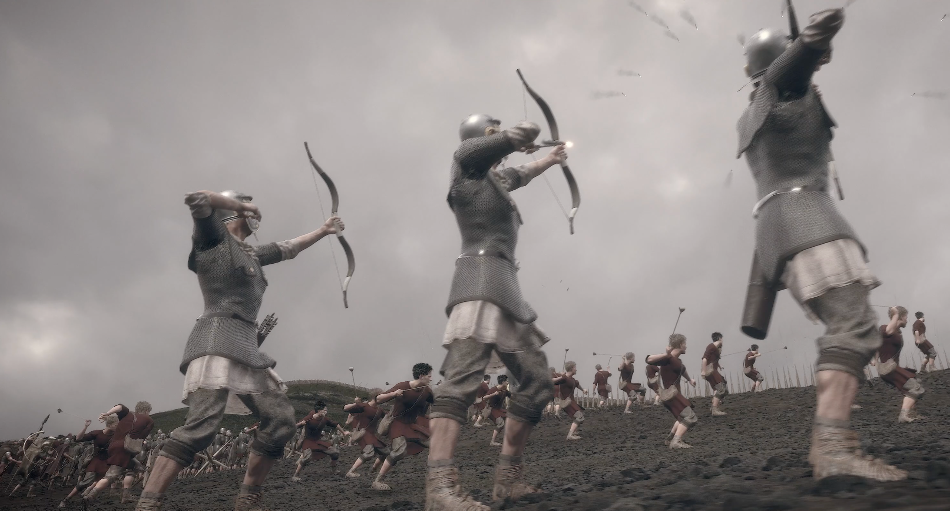
The evidence provided by the relatively new discipline of conflict archaeology puts some meat on the bones of the writings of ancient authors and more recent academic speculation, when referring to Roman warfare in Britain. John Reid will share the results of three Trimontium Trust projects that have added significantly to our understanding of some key periods of warfare that took place during the Roman occupation of Britain, ranging from St Albans to Southern Scotland.

Thursday 21 November 2024
Paddy Lambert
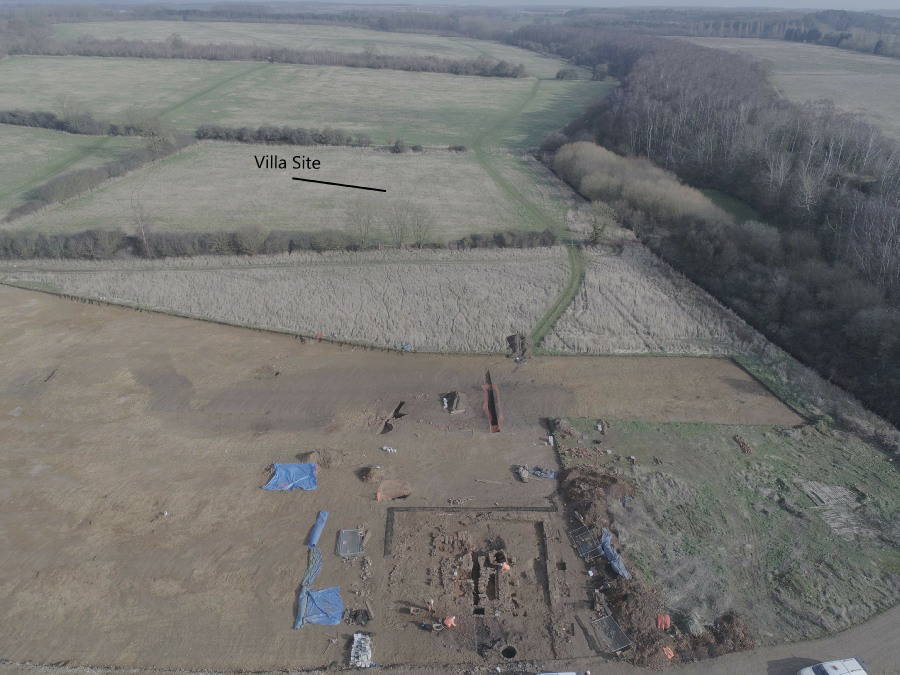
The Weird and Wonderful Roman Villa Site at Priors Hall
The Roman site at Priors Hall, Corby represents an extremely important discovery from the world of Roman Britain and offers a breathtaking glimpse into rarely seen aspects of villa life. Investigated between 2019 and 2021, the breathtakingly well-
Activity was centered around brick, tile manufacture and pottery manufacture on a large scale. The principle tileries and subsidiary structures were constructed within the shell of an earlier stone structure, and this is interpreted as being an early Roman mausoleum, associated with the first phases of the villa and its inhabitants. This is the only likely example of this type of repurposing known from Roman Britain and prompts exploration of the reasons behind this radical change of function. It foregrounds the human in what is often seen as a record of past events through the dispassionate lens of site phases. The results of this excavation won the Current Archaeology Award 2021 for ‘Rescue Project of the Year’
The abundance of evidence for manufacture enables us to focus on the more rarely told stories of Romano-
Priors Hall

Thursday 12 December 2024
Becky Haslam
Roman Road Infrastructure in Southwark and Beyond: an alternative model
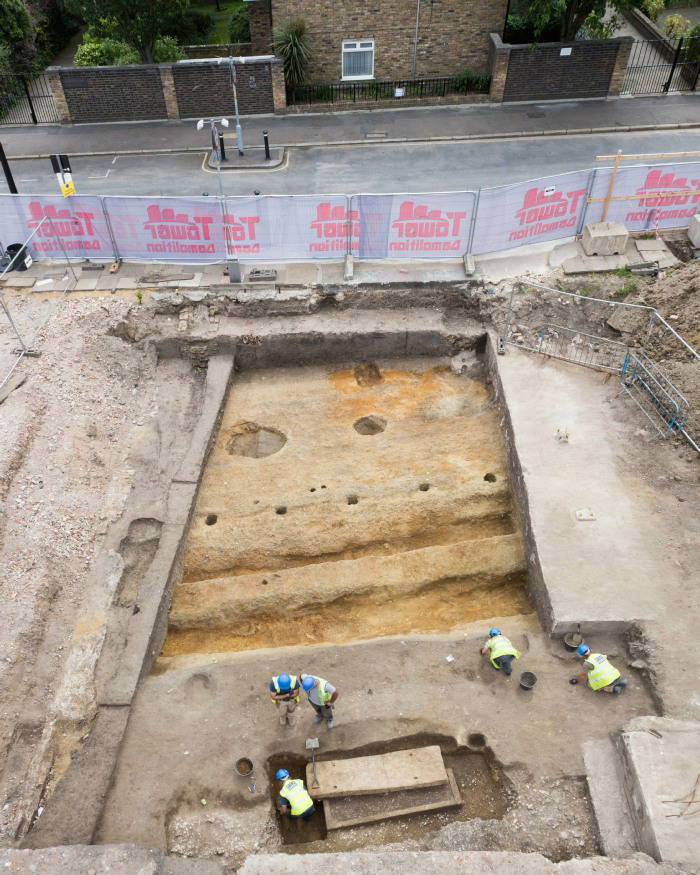
This lecture will present evidence for a series of revisions to the current model of Roman road infrastructure to the south of Southwark’s Borough Channel. Recent discoveries on the sites of Harper Road and Brandon House, in combination with a reappraisal of the existing corpus of evidence on this topic, together make a convincing case that the current model be modified in several ways. Primarily, this involves a revision to the route of Stane Street across the southern mainland of Roman Southwark, from which a new location for the junction between Stane Street and Watling Street has been extrapolated. This undertaking in turn necessitates that the evidence that was previously used to justify the former course of Stane Street be reviewed. It is suggested here that this points towards the presence of a hitherto unknown road that may have extended westwards from Watling Street. The lecture then goes on to consider the impact of this revised model on Roman-

Thursday 09 January 2025
Susan Rands
Sustaining cavalry capability on the northern frontier
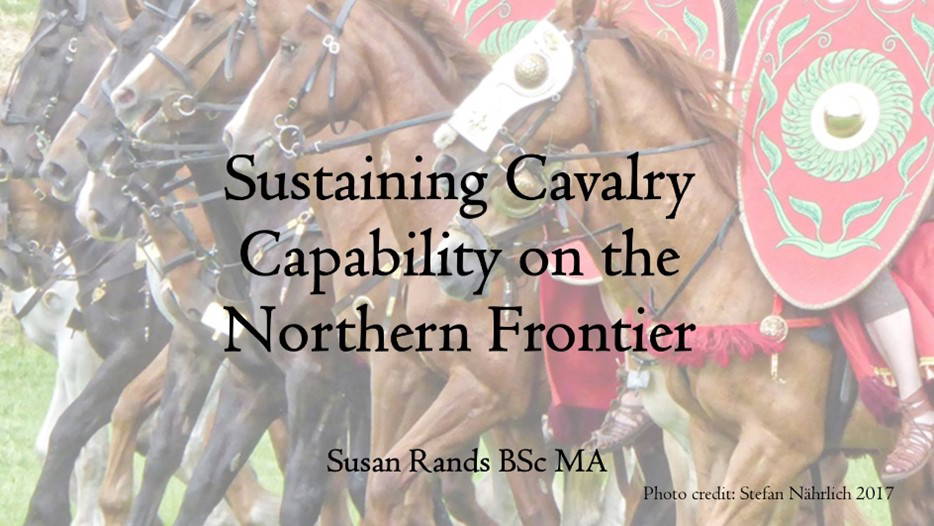
Horses were critical to Rome’s military success on the British Northern Frontier, acting as force multipliers to provide the mobility and responsiveness key to securing peace in the province. Fit, trained cavalry troops can cover a distance of 25 miles in under 6 hours allowing the alae from Stanwix and Chesters to reach far across Hadrian’s Wall in just a few days. The horses had to cover long distances at speed and still be able to carry their troopers into combat at any time. A robust system of sourcing, training and supply of suitable horses, involving government officials, unit commanders, trainers and breeders supported the Roman cavalry in its task. The road network played a key part in distribution, with evidence of breeding centres and a possible training gyrus at The Lunt, located close to major junctions. Remounts would be required on a routine basis to address normal attrition and on a surge basis to replace combat

Thursday 23 January 2025
Dr. Kris Lockyear
Roads around Colchester
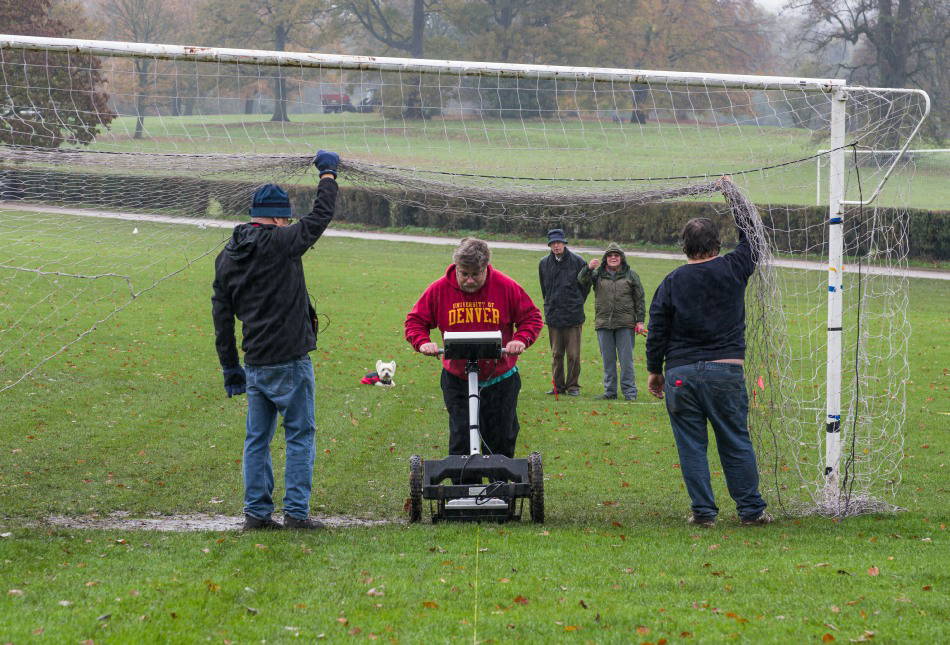
Since 2013 the Community Archaeology Geophysics Group have been undertaking geophysical surveys at the Roman city of Verulamium. This talk will firstly explain the survey techniques used by the group and then go on to look at some of the results. The surveys have revealed pottery kilns, ditches, roads, pits, domestic buildings, temples, the town aqueduct and, in 2022, a series of larger building complexes one of which appears to be a ‘palace’.

Thursday 20 February 2025
Alan Montgomery
The Road to Mons Graupius: A Journey Through Roman Scotland
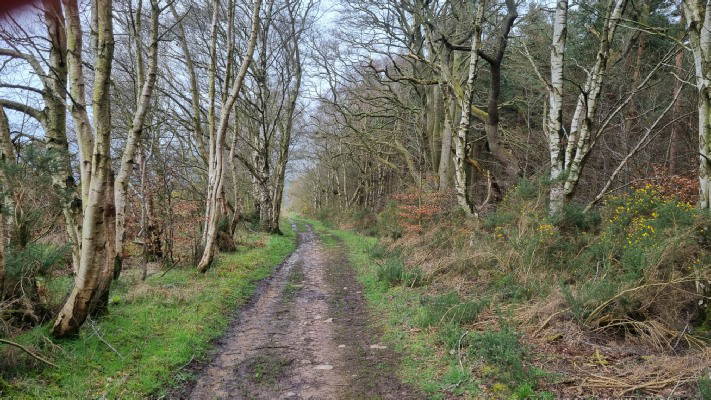
In this talk, Alan Montgomery will discuss his new book that charts his journey along a Roman road through Scotland, from the Borders up to Angus through some of the country’s most spectacular landscapes and past many of its most intriguing ancient monuments. Travelling on foot, by bicycle and by car, the author searched for evidence of the first-

Thursday 27 March 2025
Neil Godfrey
Romano-
Whilst evidence for both Roman roads and religious sites in Roman Britain continues to grow, the potential relationships between them remain relatively under-

Thursday 24 April 2025
Mike Luke
The Roman road network associated with the small town at Sandy, Bedfordshire
This talk will focus on previously known and recent evidence for the Roman road network associated with the small town at Sandy in Bedfordshire. A recently published review has demonstrated that Roman Sandy, a small town in Bedfordshire, was defended by a wall and ditch. The review also clarified the layout of key roads associated with the settlement.
The talk will include a summary of the evidence for Iron Age settlement in the area. The evidence includes three hillforts, suggesting that the Sandy area was an important location during this time. The routing of the some of the early roads in the area therefore presumably reflected the need to serve a pre-
The possible existence of other ‘major’ Roman roads, connecting Sandy to the small towns at Cambridge and Irchester, and the Bedford area and Thrapston area, will also be debated.
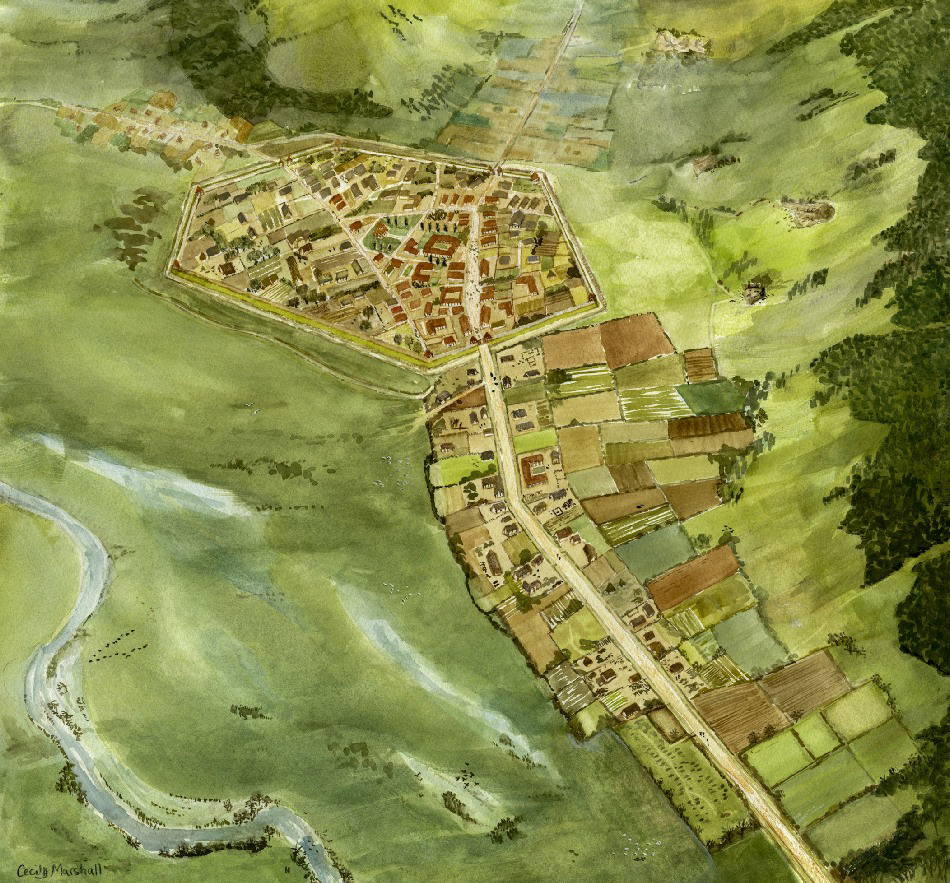
Reconstruction of the Roman small town at Sandy and associated roads, by Cecily Marshall